The future of innovation is defined by rapid technological progress that is reshaping how businesses operate, how people work, and how societies solve global challenges. Innovation today increasingly relies on cross-disciplinary collaboration to address complex global challenges. In addition, artificial intelligence, biotechnology, and quantum computing are continuously evolving.
These advancements are reshaping economies, industries, and everyday life at an unprecedented scale. Although innovation has previously been primarily associated with introducing new technologies, we need more sophisticated, environment-friendly systems to empower humanity and address such problems.
Challenges such as climate change, access to healthcare, and digital inequality highlight the need for adaptability and long-term foresight.
We are on the brink of a new decade: innovation shifts at an extraordinary speed. Technology is advancing rapidly in response to evolving societal needs. Thus, it foreshadows radical changes in our lives, businesses, and culture worldwide. Looking into the future with these next ten years in mind, breakthroughs in both artificial intelligence and sustainability.
Together, these developments are redefining how innovation influences growth, sustainability, and long-term resilience.
In this blog post, we’ll explore the salient trends that will reshape innovation. Bringing to attention their implications for various industries and personal affairs. Furthermore, we will discuss the future of innovation and the key trends shaping the next decade in detail.
The Future of Innovation: The Rise of Artificial Intelligence
Artificial intelligence (AI) has moved from experimental technology to a core driver of modern innovation.
Automation in the Workplace
Artificial intelligence is transforming the workflows and output of many industries. In manufacturing, robots take care of monotonous work. This shift allows employees to focus on strategic, creative, and decision-based work. Not only does this increase efficiency, but it also creates jobs in fields such as AI maintenance and software development.
Personalised Experiences
Retailers are using AI to help provide customised shopping experiences for their consumers. Using user information, Amazon and Netflix give customised recommendations of products and content based on individual preferences. Hence, this is an example of a targeted service that increases customer contentment and retention, intensifying overall business performance.
Future of Innovation in Sustainability and Green Innovation
As climate concerns intensify, sustainability has become a primary driver of technological innovation.
Renewable Energy Solutions
Renewable energy technologies are projected for dramatic growth in the next decade. Likewise, renewable energy, such as solar and wind, is now affordable and available, helping individuals and enterprises achieve sustainability. More people opt to install solar panels in their homes; this approach benefits both long-term cost savings and environmental impact.
Circular Economy
Many businesses are embracing the circular economy principles and, more so, product reuse and recycling. Businesses are reorganising their operations to reduce waste and foster circularity. One of the top companies that is creating strategies is IKEA. All these methods for material recycling and the manufacture of products support the easy deconstruction and recycling of the products.
Health Tech Revolution
Technology is developing at a rate that is drastically altering the healthcare sector.
Telemedicine
The COVID-19 epidemic led to a rise in telemedicine use. So patients could get a consultation in the comfort of their homes. In this trend, health services should also become more inclusive and convenient. Especially for people residing far away from urban centers.
Wearable Health Devices
Wearables, including fitness trackers and smartwatches, are gaining popularity due to increased acceptance. Using these devices, people can track important health information and physical activity. Also, they need the tools to take care of their health proactively. Just imagine how easy it is to wear monitoring devices on the wrist. These devices enable early detection and proactive health management.
The Evolution of Remote Work and Its Role in the Future of Innovation
Remote work has changed our perspectives on employees’ methods and places of collaboration.
Flexible Work Environments
Firms offer flexible work opportunities more and more, allowing employees to decide not only where but also when to work. Therefore, many employees have been complaining about improved work satisfaction and better approaches to working. Many professionals report improved work–life balance due to flexible remote work models.
Collaboration Tools
Digital collaboration tools now enable teams to work efficiently across locations and time zones.
These tools allow teams to collaborate efficiently from any location while maintaining flexibility. Using such platforms as Zoom and Slack makes remote communication and project management far better than previously, since people are still connected even from far away through these platforms.
The Impact of 5G Technology on Connectivity and the Future of Innovation
The introduction of 5G technology will alter how we connect.
Enhanced Internet Speeds
With significantly faster speeds and lower latency, 5G enables real-time digital experiences. The progress will benefit such industries as entertainment and education. As it will ensure that high-quality content is also more accessible.
Smart Cities
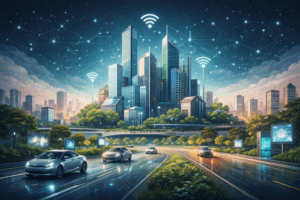
Infrastructure that defines smart cities will depend heavily on the potential of 5G networks. Moreover, municipalities benefit from the integration of city devices and systems. Its purpose is to manage traffic, save energy, and increase the quality of public services. Imagine a city where smart traffic in real-time controls traffic, reducing congestion and making the air cleaner.
Conclusion: A Shared Vision for the Future of Innovation
But, in the end, the future of innovation is set to change how we live. Work and engagement with the environment are also important. With society embracing innovative tools and supporting teamwork and collective creativity, great achievements and solutions to world problems are attainable.
If we look forward, our common pledge will influence the direction of innovation. To establish a smarter, cleaner, and more inclusive environment.
The next decade is going to be full of innovation and change. As we embrace these powerful tendencies, flexibility and open-mindedness are crucial. While technology plays a part in our future, it’s about so much more than that. In short, it’s about using these innovations to create a brighter future for all humanity.
Let’s continue to be excited and engaged as we navigate the rapidly changing environment together. Understanding these innovation trends helps individuals and businesses prepare for a future shaped by adaptability, sustainability, and continuous technological progress.
Umaimah is an SEO strategist with 5+ years of experience in digital content and growth systems. She founded Ambition Inside to publish structured, research-driven insights on productivity, career strategy, and AI-driven business growth. Learn more on the About page.








Pingback: AI Shopping Cart Revolution: Personalized Online Shopping
Pingback: Innovation Mindset: Why It's More Than Just Having Ideas
Pingback: Enjoying Everyday Life: Smart Living with Cutting-Edge Tech